The global jewelry industry relies heavily on sterling silver not only for its aesthetic brilliance but also for its exceptional chemical and physical versatility in the workshop. While consumers often judge a piece of jewelry solely by its exterior appearance, the true value, longevity, and structural integrity of an item are determined during the manufacturing process. Working with silver requires a deep understanding of metallurgy, precise thermal controls, and advanced surface chemistry to overcome the metal’s natural vulnerability to oxidation and mechanical stress.
To fully appreciate the craftsmanship behind your collection, you must explore the chemical benefits of the Silver Jewellery Electroplating Process Explained, weigh the protective advantages of Rhodium Plating Silver Benefits Cost, and understand the meticulous artistry behind the Oxidized Silver Jewelry Antique Finish. Masterfully executing these technical phases transforms raw, unstable silver alloys into highly resilient, brilliant pieces of wearable art that meet modern commercial standards.
The Silver Jewellery Electroplating Process Explained in Depth
Electroplating is a highly sophisticated electrochemical process used in modern manufacturing to alter the surface characteristics of a metal object. In silver jewelry production, electroplating is utilized to deposit a microscopic layer of another precious metal onto the sterling silver base, enhancing its color, shine, and resistance to environmental degradation.
The Underlying Chemistry of the Plating Bath
The electroplating process takes place inside a specialized chemical bath containing an aqueous solution of metal salts, such as gold, rhodium, or platinum compounds, which act as the electrolyte. The silver jewelry piece is thoroughly cleaned to remove all surface oils and micro-debris, as any contaminant will prevent the plating layer from bonding. Once pristine, the jewelry is suspended in the solution and connected to a direct electrical current, acting as the negative electrode or cathode. A solid piece of the plating metal is placed into the bath as the positive electrode or anode.
The Migration of Metal Ions
When the electrical current is activated, it triggers a controlled chemical reaction. The electrical energy forces the metal atoms at the anode to dissolve into the electrolyte solution, transforming into positively charged metal ions. These ions are immediately attracted to the negatively charged silver jewelry piece. As they make physical contact with the silver surface, the ions gain electrons and revert into solid metal atoms, tightly bonding to the silver substrate lattice structure. This builds a uniform, ultra-thin metallic shield across every intricate curve and groove of the jewelry.
Quality Control and Thickness Variables
The durability of an electroplated layer depends on its thickness, which is measured in microns. Flash plating, which is under 0.5 microns, provides a quick color change but wears off rapidly under daily friction. For high-quality commercial jewelry, a plating thickness of 1.0 to 2.5 microns is standard for earrings and pendants, while rings require thicker layers to withstand constant contact. Manufacturers must precisely regulate the current density, chemical concentration, and immersion time to ensure the plating layer is perfectly smooth, dense, and free of microscopic pinholes that could expose the underlying silver to air.
Weighing Rhodium Plating Silver Benefits Cost for Maximum Longevity
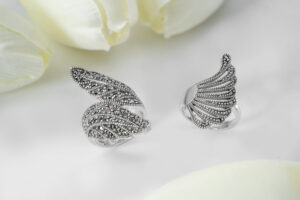
Rhodium is an ultra-rare, ultra-dense precious metal belonging to the platinum family. Because it boasts an extraordinarily high reflective index and incredible hardness, rhodium plating has become the premium gold standard for protecting and enhancing high-end sterling silver jewelry.
The Structural and Visual Benefits of Rhodium
Applying a thin layer of rhodium over a 925 sterling silver jewelry piece provides two massive advantages: complete tarnish immunity and superior scratch resistance. Rhodium does not contain copper or iron, meaning it is completely inert to atmospheric sulfur and oxygen; it will never oxidize, blacken, or lose its mirror-like shine. Furthermore, rhodium is physically much harder than silver, creating a rigid external shell that shields the soft silver alloy underneath from daily abrasions, micro-scratches, and structural dents. Visually, rhodium gives silver a deeper, colder, and more luxurious chrome-like finish that mirrors the appearance of white gold.
Understanding the Cost Dynamics and Market Variables
While the benefits of rhodium plating are undeniable, it introduces specific financial considerations for both manufacturers and consumers. Rhodium is one of the most expensive commodities in the world, often trading at prices significantly higher than gold due to its extreme rarity and complex extraction processes. Consequently, buying a rhodium-plated silver ring carries a higher initial retail price than an untreated piece. Additionally, rhodium plating is not permanent; daily wear and friction will eventually erode the protective layer over a period of twelve to twenty-four months, requiring the consumer to pay for periodic re-plating services at a professional jeweler.
Hypoallergenic Safety Factor
An often-overlooked benefit of rhodium plating is its biocompatibility. Many individuals experience allergic contact dermatitis when wearing sterling silver because their sweat leaches out the trace amounts of nickel or copper present in the alloy, causing skin discoloration and irritation. Rhodium is completely hypoallergenic. By encapsulating the sterling silver base inside a pure rhodium shell, it prevents these potentially irritating metal molecules from making direct contact with the wearer’s skin, making fine silver designs safe for individuals with extreme dermal sensitivities.
The Art and Science of the Oxidized Silver Jewelry Antique Finish
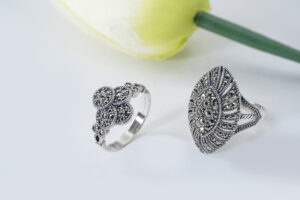
While rhodium plating aims for flawless, high-contrast brightness, the technique of oxidation embraces the dark side of silver’s chemical nature. Controlled oxidation is a artistic manufacturing process where silversmiths intentionally accelerate the tarnishing reaction to create an antique, high-contrast visual finish.
The Chemical Formulation of the Oxidation Process
To create an authentic oxidized finish, jewelers do not wait months for natural air exposure. Instead, they submerge the finished silver piece into a hot solution of potassium sulfide or a specialized chemical compound known as “liver of sulfur.” This chemical bath instantly reacts with the copper and silver atoms on the surface of the jewelry, creating a thick, dark, and uniform layer of silver sulfide across the entire exterior. The jewelry emerges from the bath completely pitch-black or covered in deep iridescent shades of charcoal grey and blue.
Relief Polishing for Artistic Contrast
The true magic of the oxidized finish happens during the post-treatment relief phase. Once the jewelry is blackened, the artisan uses an abrasive buffing wheel, fine steel wool, or a polishing cloth to carefully rub away the dark sulfide layer from the high, flat, and exposed surfaces of the design. The dark oxidation is left untouched inside the deep crevices, recessed patterns, engraved lines, and filigree textures. This creates a stunning, high-contrast visual effect that accentuates the dimensional depth of the metalwork, making intricate relief patterns and hand-carved details stand out dramatically.
Low Maintenance and Aging Gracefully
Oxidized silver jewelry is incredibly popular among consumers because it is exceptionally low maintenance. Unlike high-polish silver that demands constant cleaning to eliminate tarnish, an intentionally oxidized piece is already chemically stabilized. Minor scratches, daily dust accumulation, and natural atmospheric tarnishing actually blend seamlessly into the existing antique aesthetic, enhancing its rugged, historical charm over time. When cleaning these pieces, owners must strictly avoid chemical dips and polishing pastes, as these aggressive compounds will accidentally strip away the beautiful, hard-earned dark contrast from the deep grooves.